SENJA STUDIO · PROJECT MANAGEMENT
Managing a Critical Project Delay
How I assessed a critical dependency, developed a recovery strategy, and managed stakeholder communication during a simulated website launch.
An unexpected photography delay threatened the final stages of a website launch. Through project impact assessment, dependency analysis, and recovery planning, I developed a structured response designed to protect the approved scope, quality standards, and decision-making process.
THE PROJECT
A website launch with a fixed deadline
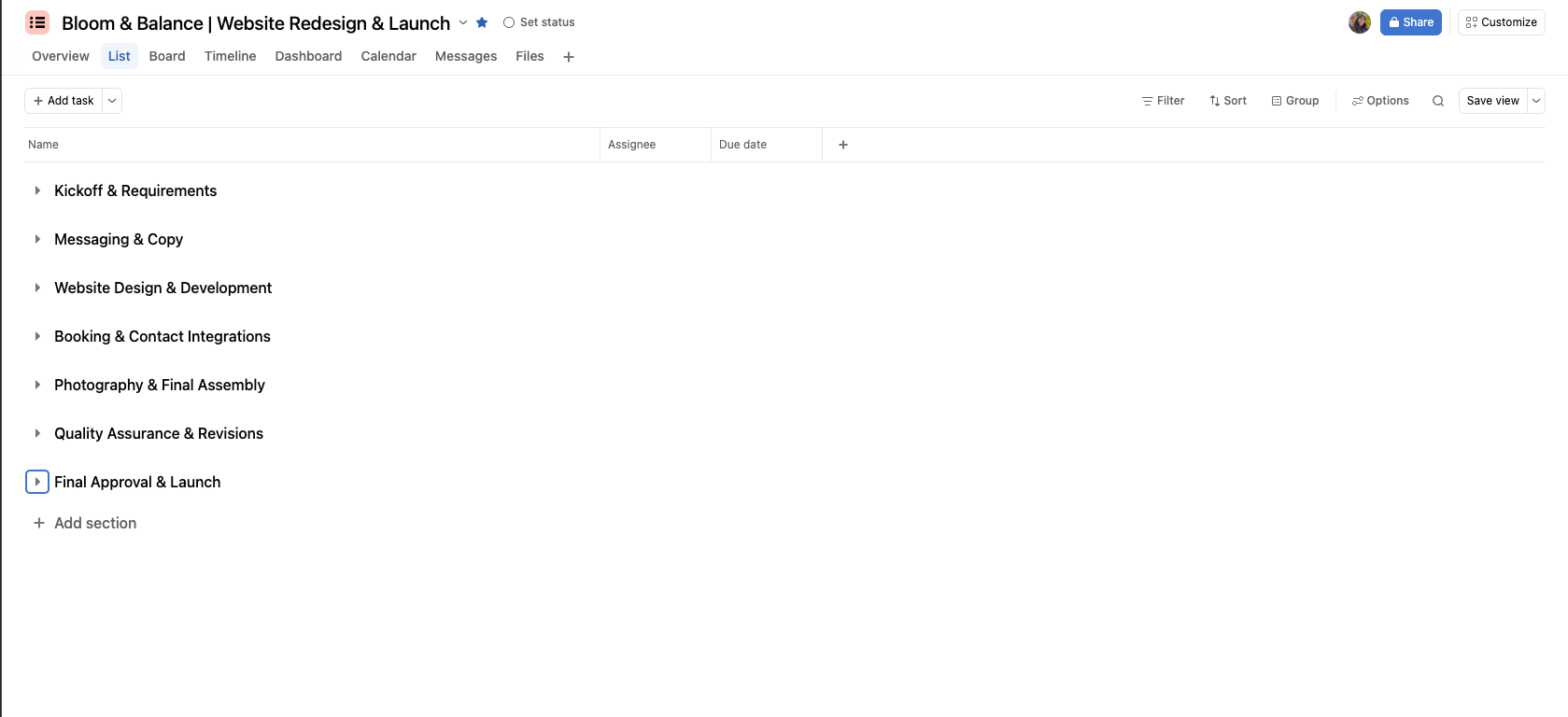
Bloom & Balance is a fictional online wellness coaching business preparing to redesign and launch its website.
The approved project included a five-page redesign, updated copy, new brand photography, an integrated appointment-booking system, a functioning contact form, and mobile-responsive design. The launch deadline was October 23, 2026.
As the Digital Business Manager in this simulation, my responsibility was to translate the approved scope into a coordinated plan and assess how the team could deliver it within the available timeline. The work involved the founder, website developer, copywriter, virtual assistant, and photographer.
THE ORIGINAL DELIVERY SEQUENCE
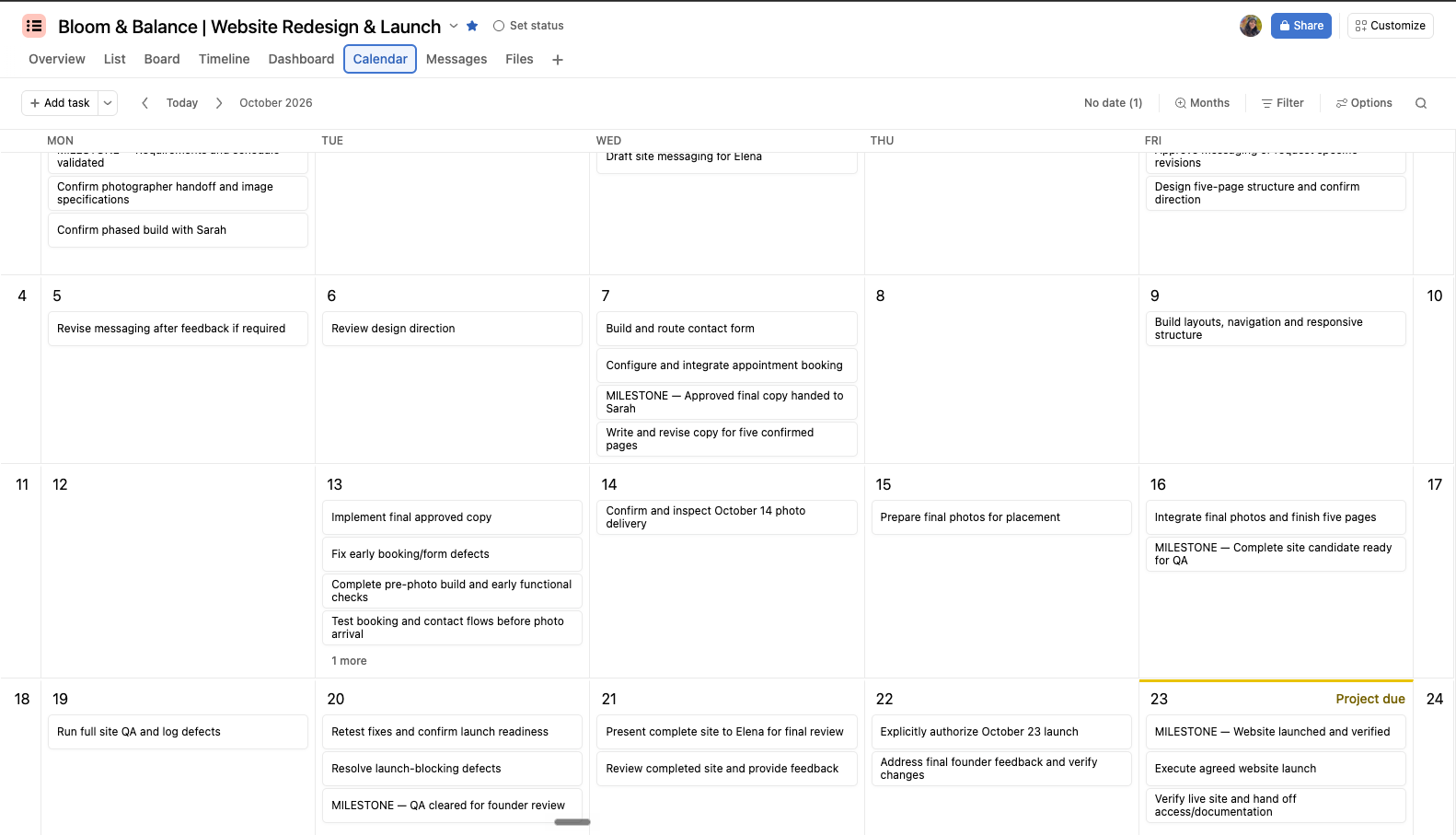
- Photography delivery→
- Website completion→
- Quality assurance→
- Founder approval→
- Website launch
THE PROBLEM
A critical deliverable arrives five days late
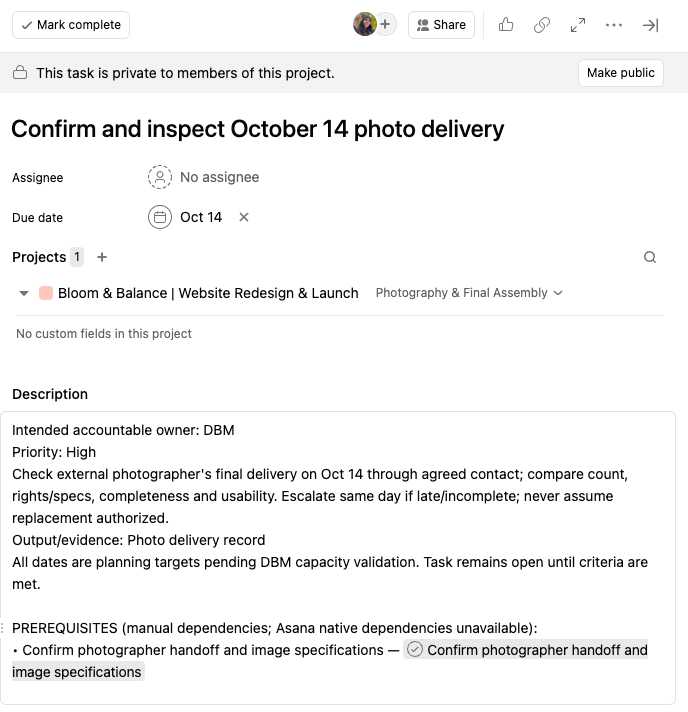
On October 14, the photographer reported that the final brand photographs would not be delivered until October 19. The original plan called for delivery on October 14 and a completed website ready for quality assurance by October 16.
Sarah, the website developer, had completed the preliminary build but could not finish the five pages without the final photography. That put website completion, quality assurance, founder approval, and the October 23 launch at risk.
The problem was not simply that one task was late. The photography delay threatened the sequence of work required to complete the project.
MY RESPONSE
Assess the impact before changing the plan
My first priority was to understand the delay’s actual impact—not immediately move the launch date or ask the developer to work extra hours. I reviewed remaining work, clarified affected dependencies, and identified what could continue while the team waited. The goal was to determine whether scope and deadline could still be maintained without compromising quality.
- 01
Assess the impact
Determine which pages remain incomplete, what depends on the final photography, and how much development time remains. Confirm the photographer’s revised delivery commitment and ask whether finished images can be delivered in batches.
- 02
Identify critical dependencies
Trace photography through final development, quality assurance, founder approval, and launch authorization. Separate work that can continue independently from work that is blocked.
- 03
Develop a recovery strategy
Coordinate independent development and preliminary testing while the team waits for the images. Reserve the remaining development window for image integration, then validate dates against team capacity and actual effort.
- 04
Protect quality and approvals
Keep the approved scope and acceptance criteria. Do not authorize extra spending, remove essential QA, use permanent substitutes, or move the deadline without the founder’s approval.
THE PROPOSED RECOVERY PLAN
Reworking the schedule around the delay
Rather than let the entire project stop while waiting for photography, I separated photography-dependent work from activities that could continue. The proposal was to complete preliminary development and testing before October 19, integrate the final photographs once delivered, then complete final QA and founder approval before the original launch date.
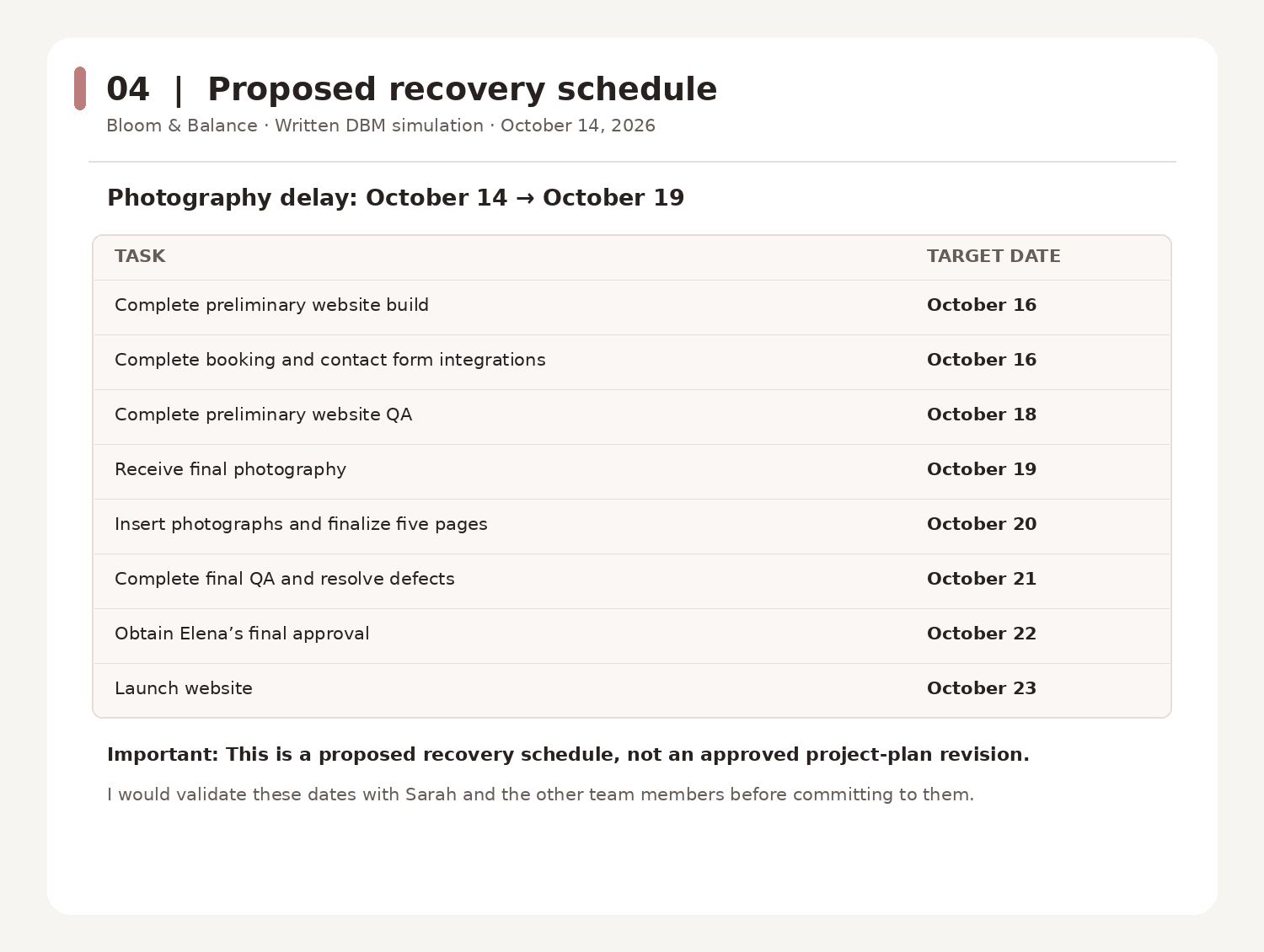
Proposed—not approved. The remaining dates required validation against the photographer’s delivery commitment, the developer’s availability, and the time needed for remaining work before the team could commit to the revised sequence.
THE MANAGEMENT PRINCIPLEA recovery plan must be evaluated against actual dependencies, available resources, and the time required for final testing and approval.
STAKEHOLDER COMMUNICATION
Communicate the issue without creating unnecessary alarm
I drafted an update for Elena that separates confirmed facts from proposed actions and decisions requiring her approval. It explains the delay and its potential schedule impact, outlines the recovery approach, and identifies what the team still needs to validate.
The update is transparent without declaring the October 23 launch impossible before the impact assessment is complete.
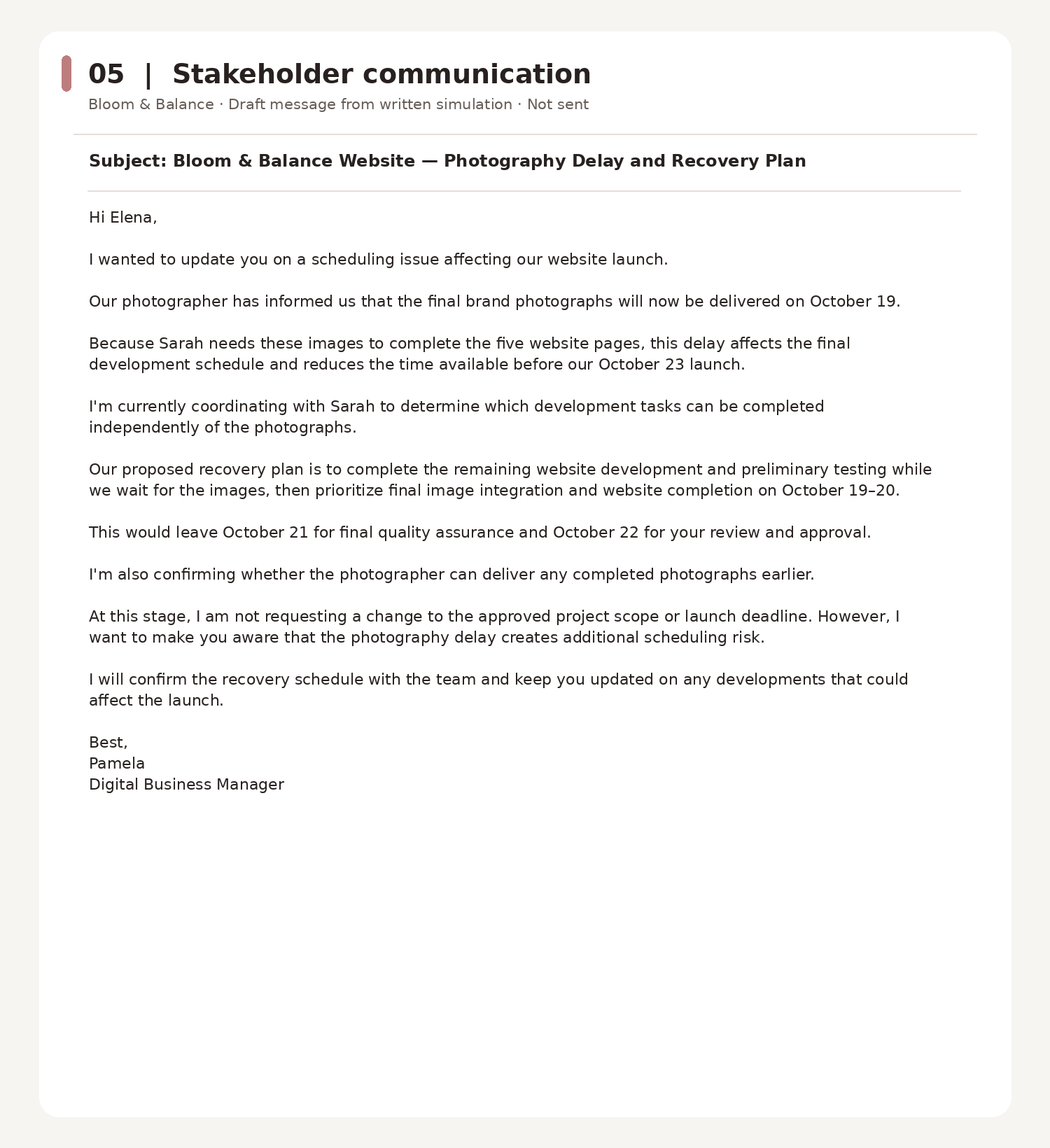
Clear communication creates informed decisions. The founder should know what changed, how the project may be affected, what the team is doing, and whether a decision is needed.
This message was drafted as part of the simulation. It was not sent to an actual client, and Elena did not respond.
THE OUTCOME
A structured response to project risk
This simulation produced a documented response to an unexpected project delay: an impact assessment, dependency review, proposed recovery schedule, stakeholder communication, and contingency planning. It reinforced the need to validate a recovery strategy before committing to revised dates—and to distinguish actions a project manager can coordinate from changes that require the business owner’s approval.
The proposed schedule was not implemented as part of a live website launch. No completed website delivery or successful October 23 launch is claimed.
Effective project management is not simply keeping tasks organized. It is identifying how unexpected changes affect the project, coordinating a realistic response, and ensuring stakeholders have the information needed to make informed decisions.
SENJA STUDIO · PROJECT SUPPORT
Need someone to keep your projects moving?
I help business owners organize priorities, coordinate moving pieces, and create clear systems for getting work done.